McKinley’s America: War & Reform at the Turn of the Century

knowaboutbullying.com – The presidency of William McKinley (1897–1901) marked a significant turning point in American history. As the 25th President of the United States, McKinley found himself at the helm of a nation in the midst of profound transformation. The political landscape, social dynamics, and economic forces of the time all converged, shaping a period of immense change. McKinley’s leadership during these years helped lay the foundations for the modern American state, steering the nation through the turbulence of war, political realignment, and economic uncertainty.

This article explores McKinley’s America, focusing on the political challenges and reforms, the Spanish-American War, and the key social and economic changes that defined the turn of the 20th century.

Politics at the Crossroads: The 1890s and the Struggle for Power

The Political Landscape of the 1890s

The 1890s was a time of economic instability and social upheaval in the United States. The country had just experienced a severe economic depression that began in 1893 and lasted for several years. The depression led to widespread unemployment, labor unrest, and significant social divisions. Farmers, particularly those in the West and South, struggled with falling crop prices and high levels of debt, while industrial workers in urban areas faced harsh working conditions and low wages.

In this environment, political divisions deepened. The two major parties—Republicans and Democrats—were embroiled in a fierce battle over the future direction of the nation. The Republican Party, led by figures like McKinley, embraced a pro-business, protectionist agenda that focused on high tariffs, a strong gold standard, and an industrialized economy. The Democrats, on the other hand, were divided between a populist faction led by William Jennings Bryan, who advocated for the free coinage of silver, and more traditional factions that opposed such measures.

McKinley emerged as a key figure in this political struggle, representing the Republican establishment and advocating for policies that he believed would stabilize the economy, protect American industry, and strengthen the nation’s global position.

The Election of 1896: McKinley vs. Bryan

The 1896 presidential election was one of the most critical and contentious in American history. The election pitted William McKinley, the Republican candidate, against William Jennings Bryan, a charismatic young Democrat from Nebraska. Bryan’s populist campaign centered on the free coinage of silver, which he argued would increase the money supply, reduce debt, and help struggling farmers and workers. Bryan’s famous “Cross of Gold” speech, delivered at the Democratic National Convention, captured the imagination of many Americans who felt left behind by the economic changes of the Gilded Age.

McKinley, by contrast, championed the gold standard and high tariffs as the path to national prosperity. He argued that stability in the currency and protection for American manufacturers were essential for economic growth. McKinley’s campaign was highly organized, with substantial funding from industrialists and business leaders who supported his pro-business policies. He conducted a “front porch” campaign, where he gave speeches to delegations of voters who visited him at his home in Canton, Ohio.

McKinley’s victory in the 1896 election was a decisive moment in American history. He won with 271 electoral votes to Bryan’s 176, signaling the beginning of a new era in American politics. McKinley’s victory marked a turning point away from the populist, agrarian-focused politics of the 1890s and solidified the Republican Party’s dominance for the next several decades.

McKinley’s Presidency: Politics, War, and Economic Policy

Economic Policy and the Dingley Tariff

One of McKinley’s first actions as president was to address the economic challenges facing the nation. The 1890s depression had left many Americans struggling, and McKinley’s administration sought to restore economic stability through protective tariffs and monetary policy. McKinley was a strong advocate for high tariffs, which he believed would protect American industries from foreign competition. In 1897, Congress passed the Dingley Tariff, which raised duties on imported goods to historically high levels. The tariff was controversial, especially among those who argued that it disproportionately benefited industrialists and harmed consumers, but it was a key part of McKinley’s strategy for revitalizing the economy.

In addition to the tariff, McKinley supported the gold standard, which had been a divisive issue in the 1890s. While Bryan and other Democrats called for the free coinage of silver to increase the money supply, McKinley believed that the gold standard would ensure financial stability and restore confidence in the U.S. economy. In 1900, Congress passed the Gold Standard Act, which officially placed the U.S. on the gold standard and helped stabilize the currency.

While McKinley’s economic policies favored industrialists and business interests, they were also crucial in the broader context of the nation’s transition from an agrarian to an industrial economy. By the end of his presidency, the economy had begun to recover, and the nation was on the path to becoming the world’s leading industrial power.

The Spanish-American War: America’s Emergence as a Global Power

McKinley’s presidency was defined in part by the Spanish-American War of 1898, a brief but transformative conflict that marked the United States’ emergence as an imperial power. Tensions between the U.S. and Spain had been growing for years, particularly over Spain’s treatment of Cuban revolutionaries. The situation came to a head in 1898 when the USS Maine exploded in Havana Harbor under mysterious circumstances. Although it was never conclusively determined who was responsible for the explosion, public opinion in the U.S. rallied for war against Spain.

McKinley, initially reluctant to engage in conflict, ultimately yielded to public pressure and declared war on Spain in April 1898. The war lasted only a few months but had far-reaching consequences. The U.S. defeated Spanish forces in Cuba and the Philippines, and Spain was forced to cede Puerto Rico, Guam, and the Philippines to the U.S. The Treaty of Paris, signed in December 1898, ended the war and marked the beginning of American imperialism.

The Spanish-American War raised profound questions about America’s role in the world. McKinley and his administration embraced the idea of overseas expansion, which some saw as necessary to ensure national security and economic growth. The acquisition of the Philippines, in particular, sparked a fierce debate over imperialism and American values. McKinley defended the annexation of the Philippines, arguing that it was America’s duty to “uplift and civilize” the Filipino people. However, the annexation led to the Philippine-American War, a brutal conflict that lasted until 1902 and resulted in the deaths of thousands of Filipinos and hundreds of American soldiers.

The Open Door Policy and McKinley’s Foreign Relations

In addition to the Spanish-American War, McKinley’s foreign policy was characterized by his administration’s efforts to expand American influence in Asia. One of the most important diplomatic initiatives of McKinley’s presidency was the Open Door Policy, which aimed to ensure equal trading rights for all nations in China. McKinley and Secretary of State John Hay were particularly concerned about European and Japanese efforts to carve out exclusive spheres of influence in China, and they pushed for the “open door” to prevent the dismemberment of China.

The Open Door Policy was not without challenges, but it represented a significant step in the U.S.’s increasing involvement in global affairs. McKinley’s efforts in China reflected the broader trend of American imperialism during this period, as the United States sought to secure markets, resources, and political influence around the world.

Social and Political Reforms at the Turn of the Century

The Rise of Progressivism

While McKinley’s presidency is often seen as one that emphasized economic stability, expansion, and imperialism, it also laid the groundwork for the progressive reforms that would dominate American politics in the early 20th century. The late 19th and early 20th centuries were marked by the rise of the Progressive Movement, which sought to address the social, economic, and political problems caused by industrialization, urbanization, and corruption.

McKinley himself was not a progressive, but his administration’s policies set the stage for reform. The economic policies he championed, particularly the protection of American industry, contributed to the rapid growth of the economy and the consolidation of corporate power. These developments, however, also led to growing inequality, labor unrest, and calls for greater government intervention in the economy.

During McKinley’s presidency, labor unions began to organize more effectively, pushing for better working conditions, higher wages, and shorter hours. The labor movement would become a key force in the early 20th century, and while McKinley did not oversee major labor reforms, his presidency laid the foundation for the regulatory measures that would be enacted under his successors.

The Legacy of McKinley’s America

McKinley’s presidency was cut short by his assassination in 1901, but the policies and issues of his administration had a lasting impact on American history. His leadership during the Spanish-American War and his embrace of imperialism helped establish the United States as a global power, while his economic policies laid the foundation for the industrial prosperity that would define the early 20th century. McKinley’s political success in uniting the country under a pro-business, protectionist agenda set the stage for the Republican dominance of the era, but it also helped fuel the rise of progressivism in the next century.

As McKinley’s America entered the 20th century, the nation was poised to play an increasingly prominent role on the world stage, while at the same time grappling with the social and political challenges of modern industrial society. McKinley’s presidency may not have been the most radical or transformative in American history, but it was a critical moment in the nation’s journey toward becoming a global superpower and a modern industrial economy.

Conclusion: McKinley’s Legacy

McKinley’s America was a nation at the crossroads of political, economic, and social change. The policies of McKinley’s presidency helped set the course for the future of the United States, steering the nation through a difficult economic period, guiding it to victory in a transformative war, and embracing a new role in the world. Though his presidency is often overshadowed by his successor, Theodore Roosevelt, McKinley’s leadership was pivotal in shaping the modern American state and its role on the global stage. His legacy continues to be a subject of debate, but his impact on the turn of the century is undeniable.

Abraham Lincoln – Civil War: knowaboutbullyinEmancipator

knowaboutbullying.com – Abraham Lincoln is a name synonymous with the struggle for freedom, equality, and justice. As the 16th president of the United States, Lincoln’s leadership during the Civil War, one of the most pivotal and traumatic periods in American history, cemented his legacy as the “Great Emancipator.” His role in leading the nation through its darkest hours, preserving the Union, and most significantly, abolishing the institution of slavery, reshaped the course of American history. This article explores Abraham Lincoln’s journey as the leader during the Civil War, his moral convictions, and the profound impact he had on the abolition of slavery, forever altering the trajectory of the nation.

The Road to the White House: A Nation Divided

A Nation on the Brink of Civil War

In the decades leading up to Lincoln’s presidency, the United States was embroiled in a deep and bitter division over the issue of slavery. The nation had developed into two distinct regions: the industrialized North, where slavery had been largely abolished, and the agrarian South, where slavery was central to the economy. The moral, social, and political rift between these two regions had been widening for years, and the question of whether slavery should be allowed to expand into new territories became a central issue.

By the time Lincoln was elected president in 1860, the Southern states saw his victory as a direct threat to the institution of slavery. Lincoln’s Republican Party platform, which advocated for the restriction of slavery’s expansion into new territories, was viewed as an existential threat by many in the South. The immediate result of his election was the secession of several Southern states, beginning with South Carolina in December 1860, followed by Mississippi, Florida, Alabama, Georgia, Louisiana, and Texas. The formation of the Confederate States of America (CSA) followed, with Jefferson Davis named its president.

Lincoln was sworn into office on March 4, 1861, at a time when the nation was on the verge of collapse. The Confederacy had already taken control of key federal properties in the South, and tensions were escalating. Lincoln’s primary mission was to preserve the Union and avoid war, but he was faced with the undeniable reality that conflict was inevitable.

The Outbreak of War

When Confederate forces attacked Fort Sumter in Charleston, South Carolina, on April 12, 1861, Lincoln’s worst fears were realized. The Civil War had officially begun. In his response, Lincoln called for 75,000 Union troops to suppress the rebellion. The attack on Fort Sumter unified the North, though it also led to the secession of four additional states — Virginia, Arkansas, North Carolina, and Tennessee — into the Confederacy.

From the outset, Lincoln’s leadership was tested on multiple fronts. He had to manage military strategy, ensure the loyalty of border states like Kentucky and Maryland, and navigate the complexities of international diplomacy, all while maintaining his commitment to preserving the Union. But it was his stance on slavery that would come to define the war and his presidency.

Lincoln and the Question of Slavery

A Personal Conviction Against Slavery

Although Lincoln was a politician, he was also deeply guided by a moral compass. His views on slavery were influenced by his upbringing in the frontier and his belief in the principles of equality laid out in the Declaration of Independence. Lincoln believed that slavery was morally wrong and a direct contradiction to the nation’s founding ideals of liberty and justice. However, as president, Lincoln initially focused on preventing the spread of slavery to new territories rather than immediate abolition, fearing that a radical stance on slavery would further alienate the Southern states and push them deeper into rebellion.

During the early years of the Civil War, Lincoln faced mounting pressure from abolitionists to take decisive action against slavery. While he recognized the injustice of slavery, he was also mindful of the political and military consequences of taking action too quickly. He understood that the war was primarily about preserving the Union and that a premature move to abolish slavery could drive the border states into the arms of the Confederacy. Lincoln knew he had to balance his personal convictions with the strategic needs of the Union.

The Moral Imperative: The Emancipation Proclamation

By 1862, it became clear to Lincoln that the institution of slavery was not only a moral stain on the nation but also a crucial pillar of the Confederacy’s war effort. Slavery provided the Southern economy with a vast and cheap labor force, which in turn funded the Confederate military. Abolishing slavery, Lincoln realized, could strike a blow to the Confederacy’s resources and weaken its ability to wage war.

Thus, in September 1862, Lincoln issued a preliminary version of the Emancipation Proclamation, signaling that if the Southern states did not return to the Union by January 1, 1863, he would declare all enslaved people in Confederate-held territory to be free. Lincoln understood that this was a bold and risky move, but he also knew it was necessary for the Union’s victory. The war was no longer just about preserving the Union; it was now also about abolishing slavery.

On January 1, 1863, Lincoln signed the Emancipation Proclamation, which declared all enslaved people in the Confederacy “shall be then, thenceforward, and forever free.” The proclamation did not immediately free any enslaved people in the South, as it applied only to areas under Confederate control. However, it was a landmark decision that shifted the moral direction of the war and made the abolition of slavery an explicit war aim.

The Emancipation Proclamation also allowed for the enlistment of African American soldiers in the Union Army, further strengthening the Northern war effort. By the end of the war, approximately 180,000 African American soldiers had served in the Union Army, playing a crucial role in the defeat of the Confederacy.

The Impact on the War and the Nation

The Emancipation Proclamation had profound implications for the Civil War and the future of the United States. It made it clear to the international community that the Union was now fighting not only to preserve itself but also to end slavery. It also gave the Union a moral cause that galvanized support from abolitionists and those who believed in human rights.

The proclamation also set the stage for the eventual passage of the 13th Amendment, which would formally abolish slavery throughout the United States. In December 1865, months after Lincoln’s assassination, the amendment was ratified, ensuring that slavery would never again be permitted in the United States.

Lincoln’s Leadership in the War

A Steady Hand Amid Crisis

As the Civil War raged on, Lincoln’s leadership became a symbol of resilience. He was deeply involved in military strategy, constantly engaging with his generals and carefully navigating the complexities of wartime decision-making. Lincoln’s ability to maintain his focus on the larger goal of Union preservation, even as battles turned against the North, helped him keep the Union war effort on track.

At the start of the war, Lincoln struggled to find generals who could win decisive victories for the Union. However, he eventually found a capable leader in Ulysses S. Grant, whose victories at Vicksburg and Chattanooga turned the tide of the war in the Union’s favor. Lincoln’s decision to make Grant the commanding general of all Union armies was a critical turning point. Grant’s strategy of total war, which aimed to destroy the Confederacy’s ability to fight, was aligned with Lincoln’s unwavering goal of defeating the South.

While Lincoln faced immense pressure and criticism, especially during early military setbacks, he remained steadfast in his commitment to preserving the Union. His leadership was characterized by patience, perseverance, and a willingness to make difficult decisions in pursuit of a higher moral goal.

The Gettysburg Address

One of the most defining moments of Lincoln’s presidency came on November 19, 1863, when he delivered the Gettysburg Address at the site of the Battle of Gettysburg, a pivotal Union victory. In his brief but powerful speech, Lincoln reaffirmed the core principles of the nation: liberty, equality, and democracy. He framed the war as a test of whether the United States could endure as a nation “conceived in Liberty, and dedicated to the proposition that all men are created equal.”

Lincoln’s words were not just a call for national unity but a moral statement about the future of the country. He spoke of a “new birth of freedom” and envisioned a nation where the government was truly “of the people, by the people, for the people.” The speech, though short, became one of the most iconic in American history and helped to redefine the war as a struggle not just for Union, but for the very soul of the nation.

Lincoln’s Legacy: Emancipator of a Nation

The End of the War and Lincoln’s Assassination

By the spring of 1865, the Confederacy was in its death throes. General Robert E. Lee’s surrender at Appomattox Court House on April 9, 1865, marked the end of the Civil War. Lincoln had seen the Union through its most trying period, and the nation was on the path to reconciliation and reconstruction.

However, Lincoln did not live to see the full fruits of his labor. On April 14, 1865, just days after the Confederate surrender, Lincoln was assassinated by John Wilkes Booth, a Confederate sympathizer, while attending a play at Ford’s Theatre in Washington, D.C. Lincoln died the following day, leaving the nation to mourn the loss of its great leader.

A Nation Transformed

Abraham Lincoln’s leadership during the Civil War and his role in the abolition of slavery changed the course of American history. His unwavering commitment to preserving the Union, coupled with his moral resolve to end slavery, ensured that the United States emerged from the war as a stronger, more unified nation, dedicated to the principles of freedom and equality.

Lincoln’s legacy as the “Great Emancipator” endures to this day. He is remembered not only for his leadership during the Civil War but for his moral vision of a nation built on the ideals of liberty and justice. The abolition of slavery and the preservation of the Union were his greatest achievements, and they laid the foundation for the future of the United States, ensuring that the nation would remain dedicated to the principles of freedom and equality for generations to come.

Conclusion

Abraham Lincoln’s role in the Civil War and the abolition of slavery is central to understanding the American experiment and its evolution into a nation committed to the ideals of liberty and equality. His leadership during the darkest hours of the nation’s history not only preserved the Union but also transformed the United States into a more just and inclusive society. As the Emancipator of a Nation, Lincoln’s legacy continues to inspire leaders and citizens around the world, serving as a reminder of the power of moral leadership in times of crisis.

The Impact of the Civil War on Sierra Leone

knowaboutbullying.com – The Sierra Leone Civil War, which lasted from 1991 to 2002, had profound and lasting effects on the country. Initiated by the Revolutionary United Front (RUF) with support from Liberian dictator Charles Taylor’s National Patriotic Front of Liberia (NPFL), the conflict resulted in significant human and economic losses. This article explores the various impacts of the civil war on Sierra Leone, including its social, economic, and political repercussions.

Human Toll

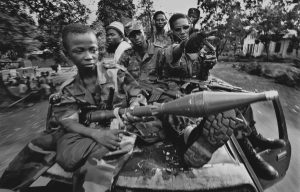
The civil war in Sierra Leone was marked by extreme violence and brutality. It resulted in the deaths of between 50,000 to 70,000 people, with an estimated 2.5 million individuals displaced, which is more than a third of the country’s population at the time. The conflict also saw the widespread use of child soldiers, with many children under the age of 18 being forcibly recruited into armed groups. The trauma and loss experienced during this period have left deep scars on the Sierra Leonean society.

Economic Devastation

The economic impact of the civil war was catastrophic. The war destroyed much of Sierra Leone’s infrastructure, including its health systems and educational institutions. The mining sector, which is a crucial part of Sierra Leone’s economy, was severely affected. The war led to a significant decline in diamond exports, which are a major source of revenue for the country. The destruction of infrastructure and the displacement of people also hindered agricultural production, leading to food shortages and economic instability.

Political Instability

The civil war exacerbated political instability in Sierra Leone. The conflict saw multiple coups and changes in government, with the military playing a significant role in politics. The war also highlighted the deep ethnic and regional divisions within the country, which were exploited by various factions to fuel the conflict. The political landscape remained volatile even after the war, with sporadic violence and challenges in conducting peaceful elections.

Post-War Reconstruction

The post-war period has been marked by efforts to rebuild and stabilize Sierra Leone. The country received significant international support, including peacekeeping missions and aid from the United Nations and other international organizations. The government has focused on rebuilding infrastructure, promoting economic growth, and addressing the social and psychological needs of war-affected communities. Despite these efforts, the legacy of the war continues to influence Sierra Leone’s development trajectory.

Conclusion

The Sierra Leone Civil War had far-reaching consequences for the country, affecting its social fabric, economic stability, and political landscape. The human toll, economic devastation, and political instability created by the conflict have left lasting impacts. While significant progress has been made in post-war reconstruction, the challenges of rebuilding a nation from the ashes of such a devastating conflict remain substantial. Sierra Leone’s journey towards recovery and development continues to be a testament to the resilience of its people and the importance of international support in the face of such adversity.